
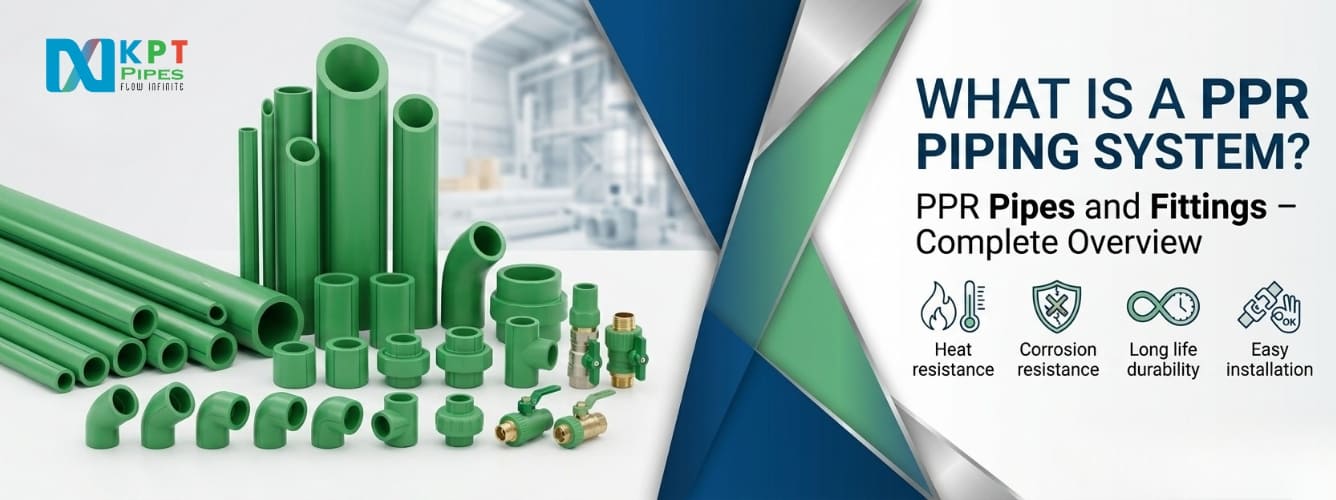
A PPR piping system is one of the most widely used modern piping solutions in plumbing and fluid distribution networks. The term PPR stands for Polypropylene Random Copolymer, a type of thermoplastic material known for its strength, durability, and resistance to heat and chemicals. Over the past few decades, PPR systems have replaced many traditional piping materials like metal and PVC in residential, commercial, and industrial applications due to their long service life and low maintenance requirements.
A PPR piping system is not just a single pipe; it is a complete network made up of pipes, fittings, joints, and accessories designed to work together seamlessly. These systems are mainly used for hot and cold water distribution, HVAC systems, and even industrial fluid transport. One of the biggest advantages is that the system is joined using heat fusion technology, which creates a strong, leak-proof, and permanent bond.
Table of Contents
ToggleUnderstanding PPR Pipes and Fittings
The backbone of any piping system is its pipes and connectors. In the case of PPR systems, both pipes and fittings are manufactured from the same material to ensure uniform performance and compatibility. PPR Pipes and Fittings are designed to handle high pressure, temperature variations, and long-term usage without corrosion or scaling.
Key Components of a PPR Piping System:
- PPR Pipes – Used for carrying water or fluids across different points.
- Fittings – Includes elbows, tees, couplers, reducers, and adapters.
- Valves – Control the flow of water in the system.
- Fusion Joints – Heat-welded connections that ensure leak-free performance.
These components are joined using a specialised heat fusion process, where the pipe and fitting are heated and then fused together. Once cooled, they form a single solid unit that is stronger than the pipe itself.
How a PPR Piping System Works
A PPR piping system operates on a simple yet highly efficient principle of thermal fusion. Unlike threaded or glued joints used in older systems, PPR systems use heat to connect pipes and fittings. This method eliminates weak points and reduces the chances of leakage.
The installation process typically involves:
- Cutting the Pipe – Pipes are cut to the required length using a pipe cutter.
- Heating the Ends – Pipe and fitting ends are heated using a fusion welding tool.
- Joining – Once softened, both ends are pushed together.
- Cooling – The joint is left to cool and solidify, forming a permanent bond.
This process ensures a uniform, smooth inner surface that allows unrestricted water flow and minimizes pressure loss.
Advantages of PPR Piping Systems
PPR piping systems have gained massive popularity due to their technical and practical advantages. Some of the most important benefits include:
1. High Temperature Resistance
PPR pipes can handle hot water up to 95°C, making them ideal for both residential and industrial hot water systems.
2. Corrosion-Free Material
Unlike metal pipes, PPR does not rust, corrode, or react with water, ensuring long-term durability.
3. Leak-Proof Joints
The heat fusion technique creates a monolithic structure that prevents leakage and joint failure.
4. Long Service Life
A properly installed PPR system can last more than 50 years under normal operating conditions.
5. Low Maintenance
Since the system is resistant to scaling and chemical deposits, maintenance requirements are minimal.
6. Eco-Friendly Solution
PPR material is recyclable and does not release harmful substances, making it environmentally safe.
Applications of PPR Piping Systems
PPR piping systems are extremely versatile and are used across multiple sectors. Their adaptability makes them suitable for a wide range of installations:
Residential Buildings
Used for hot and cold water supply lines in homes, apartments, and villas.
Commercial Buildings
Ideal for hotels, hospitals, shopping complexes, and office buildings due to their reliability and hygiene.
Industrial Use
Used in factories for transporting chemicals, compressed air, and process water.
Agricultural Sector
Suitable for irrigation systems and water distribution in farming.
HVAC Systems
Commonly used in heating and cooling systems due to temperature resistance.
Why PPR Pipes Are Better Than Traditional Pipes
Traditional piping materials like GI (galvanised iron) and PVC have several limitations, such as corrosion, leakage, and shorter lifespan. PPR systems overcome these issues effectively.
For example:
- GI pipes rust over time, reducing water quality.
- PVC pipes may deform under high temperatures.
- Threaded joints often develop leaks.
In contrast, PPR systems provide a seamless, durable, and maintenance-free solution, making them a preferred choice for modern infrastructure.
Installation Considerations
Although PPR systems are easy to install, proper technique is essential for long-lasting performance. Some key considerations include:
- Use proper fusion welding tools for joining.
- Ensure correct temperature and heating time during installation.
- Avoid over-tightening or mechanical stress on joints.
- Use high-quality PPR Pipes and Fittings from trusted manufacturers.
- Follow standard piping layout designs to avoid pressure imbalance.
Professional installation ensures maximum efficiency and long service life of the system.
Maintenance Tips for PPR Piping Systems
Even though PPR systems are low maintenance, a few simple practices can help extend their lifespan:
- Regularly inspect for visible leaks or damage.
- Ensure proper insulation in extreme temperature conditions.
- Avoid exposure to direct UV sunlight for long durations.
- Maintain proper water pressure within recommended limits.
- Use certified components for repairs or extensions.
Future of PPR Piping Systems
With growing demand for sustainable and long-lasting plumbing solutions, PPR systems are becoming the standard choice in modern construction. Their combination of durability, safety, and efficiency makes them ideal for smart cities, green buildings, and advanced infrastructure projects.
Manufacturers are also continuously improving material technology, making PPR pipes more resistant to pressure, temperature, and environmental stress.
Conclusion
A PPR piping system is a modern, reliable, and efficient solution for water distribution and fluid management. Built using polypropylene random copolymer, it offers excellent strength, corrosion resistance, and long-term durability. With easy installation, leak-proof joints, and wide applications, PPR systems are rapidly replacing traditional piping materials in both residential and industrial sectors.
By using high-quality PPR Pipes and Fittings, users can ensure a safe, long-lasting, and maintenance-free piping infrastructure that meets modern plumbing demands.
FAQs
Q1. What is a PPR piping system used for?
Ans: A PPR piping system is mainly used for hot and cold water supply, HVAC systems, and industrial fluid transportation due to its durability and heat resistance.
Q2. How long do PPR pipes last?
Ans: PPR pipes can last more than 50 years when properly installed and maintained under normal operating conditions.
Q3. Are PPR pipes safe for drinking water?
Ans: Yes, PPR pipes are non-toxic and safe for potable water systems as they do not release harmful chemicals.
Q4. Can PPR pipes handle hot water?
Ans: Yes, they can handle temperatures up to around 95°C, making them suitable for hot water systems.
Q5. Why are PPR pipes better than PVC pipes?
Ans: PPR pipes are stronger, more heat-resistant, and have leak-proof fusion joints, whereas PVC pipes can deform under heat and rely on weaker glued joints.