
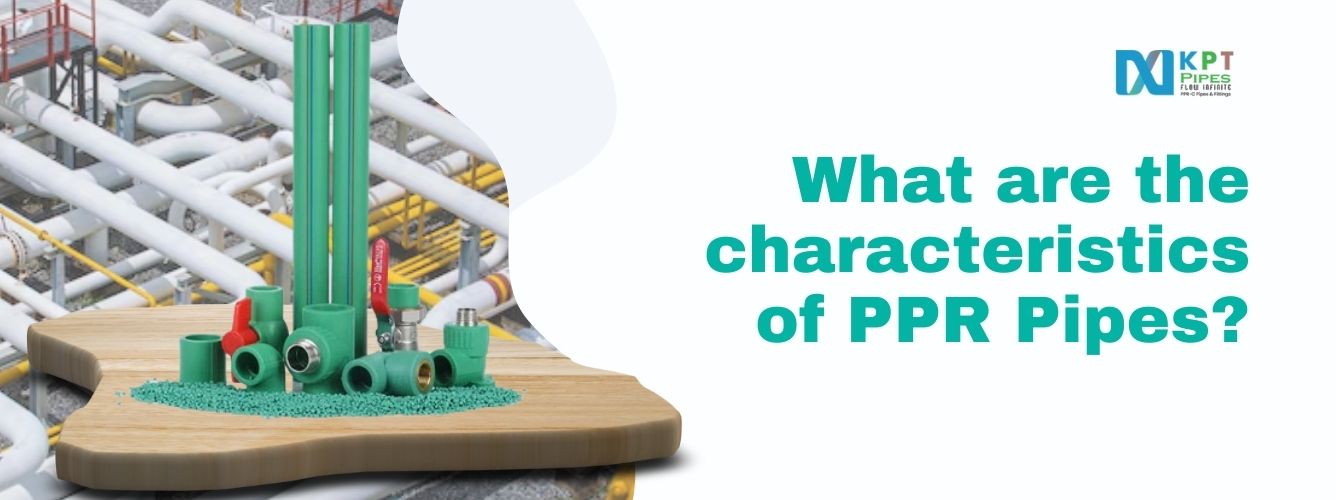
In today’s rapidly evolving plumbing and infrastructure industry, choosing the right piping material is more important than ever. Among the various options available, PPR pipes (Polypropylene Random Copolymer pipes) have emerged as a highly reliable and future-ready solution. Known for their durability, safety, and versatility, PPR pipes are widely used in residential, commercial, and industrial applications.
Let’s explore the key characteristics that make PPR pipe a preferred choice in modern plumbing systems.
Table of Contents
Toggle1. Exceptional Durability and Long Lifespan
One of the most defining characteristics of PPR pipes is their outstanding durability. These pipes are designed to withstand high-pressure and temperature conditions without losing their structural integrity. Unlike traditional metal pipes that corrode over time, PPR pipes remain unaffected by rust or chemical reactions.
With a lifespan of up to 50 years or more under normal operating conditions, PPR pipes provide a long-term, cost-effective solution for plumbing systems.
2. High Temperature and Pressure Resistance
PPR pipes are engineered to handle both hot and cold water systems efficiently. They can withstand temperatures of up to 95°C, making them ideal for hot water supply in homes, hotels, hospitals, and industries.
In addition, their ability to endure high pressure ensures consistent performance even in demanding environments such as high-rise buildings and industrial pipelines.
3. Corrosion and Chemical Resistance
Unlike metal pipes, PPR pipes do not corrode or scale over time. They are highly resistant to a wide range of chemicals, including acids, bases, and salts. This makes them particularly suitable for industrial applications where chemical exposure is common.
Their non-reactive nature ensures that the quality of water or fluid passing through them remains unaffected.
4. Hygienic and Safe for Drinking Water
PPR pipes are non-toxic and do not release harmful substances into the water. This makes them an excellent choice for potable water supply systems. Their smooth inner surface prevents the buildup of bacteria, algae, and sediments, ensuring clean and safe water flow.
Because of these hygienic properties, PPR pipes are widely used in hospitals, laboratories, and residential plumbing.
5. Leak-Proof Jointing System
One of the standout features of PPR pipes is their heat fusion jointing technique. Instead of using adhesives or threading, PPR pipes and fittings are joined by melting and fusing the pipe and fitting together.
This creates a homogeneous, leak-proof connection that is as strong as the pipe itself. The result is a highly reliable plumbing system with minimal risk of leakage.
6. Low Thermal Conductivity
PPR pipes have low thermal conductivity, which helps maintain the temperature of the fluid inside the pipe. This reduces heat loss in hot water systems and prevents condensation in cold water lines.
As a result, energy efficiency is improved, making PPR pipes an environmentally friendly option.
7. Smooth Inner Surface for Better Flow
The inner surface of PPR pipes is extremely smooth, which minimises friction and pressure loss. This ensures a consistent and efficient flow of water or fluids.
Additionally, the smooth surface prevents scaling and sediment buildup, reducing maintenance requirements over time.
8. Lightweight and Easy Installation
Compared to traditional metal pipes, PPR pipes are lightweight and easy to handle. This simplifies transportation and installation, saving both time and labour costs.
Their flexibility and ease of cutting and joining make them a preferred choice for modern construction projects.
9. Eco-Friendly and Sustainable
PPR pipes are made from recyclable materials and have a low environmental impact during production and usage. Their long lifespan reduces the need for frequent replacements, contributing to sustainability.
Moreover, their energy-efficient properties further support eco-friendly construction practices.
10. Noise Reduction Properties
Another often-overlooked characteristic of PPR pipes is their ability to reduce noise. The material absorbs sound vibrations, resulting in quieter water flow compared to metal piping systems.
This makes them ideal for residential buildings, hotels, and offices where noise control is important.
11. Resistance to Scaling and Deposits
Over time, many piping systems suffer from scaling and mineral deposits that reduce efficiency. PPR pipes, however, are highly resistant to such buildup due to their non-reactive and smooth inner surface.
This ensures consistent performance and reduces the need for frequent maintenance or cleaning.
12. Versatility Across Applications
PPR pipes are incredibly versatile and can be used in a wide range of applications, including:
- Hot and cold water supply systems
- Industrial piping systems
- Chemical transportation
- HVAC systems
- Agricultural irrigation
Their adaptability makes them a universal solution for various sectors.
Conclusion
PPR pipes have transformed the plumbing industry with their advanced features and long-term reliability. From durability and corrosion resistance to hygienic performance and energy efficiency, they offer a comprehensive solution for modern infrastructure needs.
As construction standards continue to evolve, the demand for high-performance materials like PPR pipes will only grow. Whether you are planning a residential project or a large-scale industrial setup, choosing PPR pipes ensures a safe, efficient, and future-proof plumbing system.