
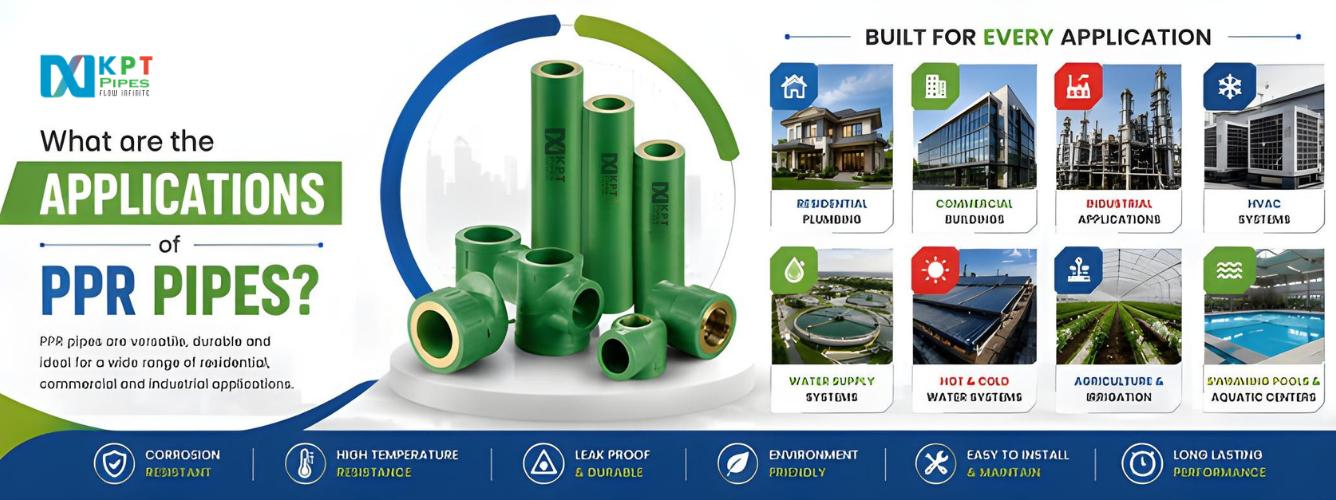
Let’s explore the major applications of PPR pipes and why they are essential in modern construction.
1. Residential Plumbing Systems
PPR pipes are extensively used in homes for both hot and cold water supply systems. Their ability to withstand high temperatures and pressure makes them ideal for daily household needs.
Unlike traditional metal pipes, PPR pipes do not corrode, scale, or react with water. This ensures a clean and hygienic water supply, which is crucial for drinking and cooking purposes. Additionally, their smooth inner surface reduces friction, ensuring better water flow and efficiency.
From kitchens and bathrooms to overhead tanks and underground connections, PPR pipes provide a long-lasting and maintenance-free solution for residential plumbing.
2. Commercial Buildings and Complexes
In commercial spaces such as offices, malls, hotels, and hospitals, plumbing systems must be efficient, durable, and capable of handling high usage. PPR pipes meet these requirements effectively.
Their leak-proof fusion welding technology ensures strong joints, reducing the risk of leakage in large-scale systems. Moreover, their resistance to chemicals and temperature variations makes them suitable for complex plumbing networks.
In high-rise buildings, where pressure and performance are critical, PPR pipes offer reliability and long-term cost savings.
3. Industrial Applications
Industries require piping systems that can handle chemicals, high temperatures, and constant pressure. PPR pipes are widely used in industrial sectors due to their excellent chemical resistance and durability.
They are commonly used in:
- Chemical processing plants
- Food and beverage industries
- Pharmaceutical manufacturing
- Textile industries
PPR pipes do not react with most chemicals, making them safe for transporting fluids without contamination. Their long lifespan also reduces maintenance costs, making them a cost-effective solution for industrial use.
4. Hot Water and Heating Systems
One of the biggest advantages of PPR pipes is their ability to handle high temperatures, making them perfect for hot water supply systems and heating applications.
They are widely used in:
- Solar water heating systems
- Centralised heating systems
- Underfloor heating solutions
PPR pipes maintain their structural integrity even under continuous exposure to hot water. Their thermal insulation properties also help in reducing heat loss, improving energy efficiency.
5. Agriculture and Irrigation Systems
In the agricultural sector, efficient water management is essential. PPR pipes are increasingly being used in irrigation systems due to their durability and resistance to environmental conditions.
They are suitable for:
- Drip irrigation systems
- Sprinkler irrigation
- Water distribution in farms
PPR pipes are resistant to UV rays and weather changes, ensuring long-term performance in outdoor environments. Their lightweight nature also makes installation easy across large agricultural fields.
6. Compressed Air Systems
PPR pipes are also used in compressed air systems in industrial and workshop settings. Their smooth internal surface minimises pressure loss, ensuring efficient air flow.
Unlike metal pipes, PPR pipes do not rust or corrode, which prevents contamination of compressed air. This makes them suitable for applications where air purity is important, such as in manufacturing units and automotive workshops.
7. Drinking Water Distribution
Ensuring safe and hygienic drinking water is a top priority in any infrastructure. PPR pipes are widely used for potable water distribution because they are non-toxic and do not alter the taste or quality of water.
Their resistance to bacterial growth and scaling makes them a reliable choice for clean water systems. Whether in residential societies or municipal water supply networks, PPR pipes help maintain water purity.
8. Fire Fighting Systems
PPR pipes are also used in fire fighting systems, especially in modern buildings. Their ability to withstand high pressure and temperature makes them suitable for emergency water supply systems.
Specially designed PPR variants are used for:
- Sprinkler systems
- Fire hydrant lines
- Emergency water pipelines
Their durability ensures that they perform efficiently even in critical situations, providing an added layer of safety in buildings.
9. HVAC (Heating, Ventilation, and Air Conditioning) Systems
In HVAC systems, PPR pipes and fittings are used for transporting chilled and hot water. Their insulation properties and resistance to temperature variations make them ideal for such applications.
They help in maintaining system efficiency by reducing energy loss and ensuring smooth fluid flow. Additionally, their long service life reduces the need for frequent replacements in HVAC networks.
10. Rainwater Harvesting and Drainage Systems
With the growing focus on sustainability, rainwater harvesting systems are becoming more common. PPR pipes are used in these systems for collecting and transporting rainwater efficiently.
Their resistance to environmental factors ensures durability, even when exposed to varying weather conditions. They are also used in certain drainage applications where corrosion resistance is required.
Why PPR Pipes Are the Future of Piping Solutions
The wide range of applications of PPR pipes highlights their versatility and reliability. Their key advantages include:
- High durability and long lifespan
- Resistance to corrosion and chemicals
- Leak-proof joints with heat fusion technology
- Excellent thermal insulation
- Low maintenance and cost-effective
As construction standards continue to rise, the demand for high-performance piping systems will only grow. PPR pipes are well-positioned to meet these demands, making them a future-ready solution for modern infrastructure.
Conclusion
PPR pipes have transformed the way plumbing and piping systems are designed and implemented. From residential homes to large industrial setups, their applications are vast and continuously expanding.
Their strength, safety, and efficiency make them an ideal choice for a wide range of uses, including water supply, heating systems, industrial processes, and agriculture. If you are looking for a reliable and long-lasting piping solution, PPR pipes are undoubtedly one of the best options available today.