

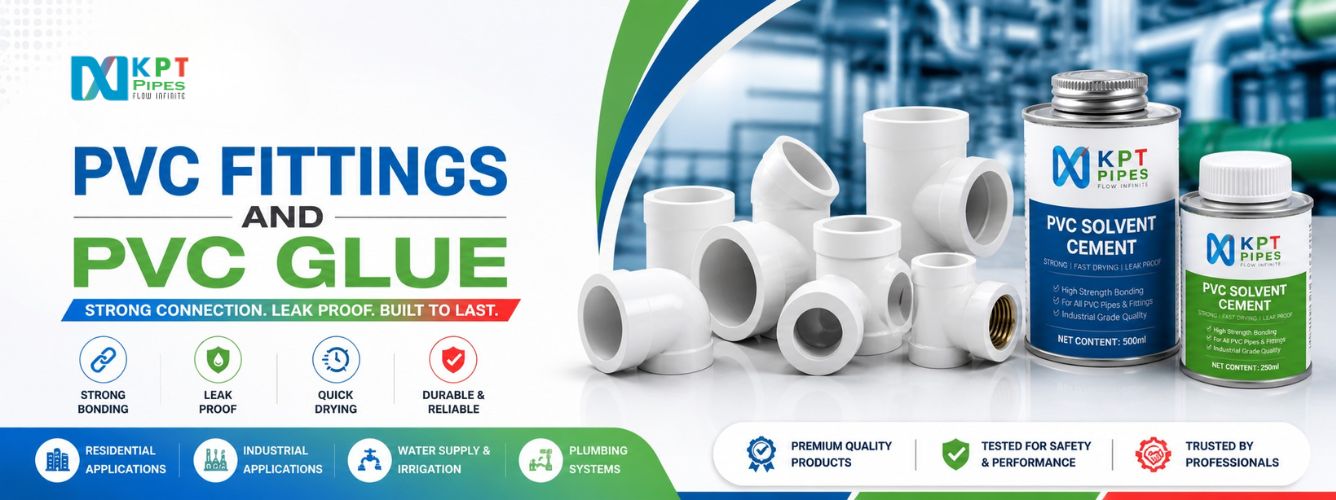
When it comes to building a durable and efficient plumbing system, the quality of materials and installation techniques plays a crucial role. As a trusted Pipes and Fittings manufacturer, KPT Pipes delivers reliable PVC fittings designed for both residential and commercial applications. However, even the best pipes and fittings require proper bonding solutions to ensure leak-proof and long-lasting connections.
PVC glue, also known as solvent cement, is an essential component in plumbing installations. It does not simply “stick” pipes together—it chemically fuses the pipe and fitting surfaces, creating a strong and permanent joint. Understanding how to select and use the right adhesive is key to ensuring system efficiency and durability.
Table of Contents
ToggleWhy PVC Glue is Essential in Plumbing Systems
In modern plumbing, especially when working with PVC and CPVC materials, glue plays a critical role in ensuring secure joints. It prevents leakage, enhances durability, and supports both high-pressure and low-pressure systems.
Unlike traditional adhesives, PVC solvent cement works by softening the surface of the pipe and fitting. When joined, the materials bond at a molecular level, forming a single unified structure. This process ensures that the connection is as strong as the pipe itself.
Proper application of glue also minimises maintenance costs and reduces the chances of joint failure, making it a cost-effective and reliable solution.
Key Factors to Consider When Choosing PVC Glue
Selecting the right glue is not just about picking any available product—it requires careful evaluation of several important factors. Here are the main aspects to consider:
1. Material Compatibility
Different types of pipes require different types of adhesives. PVC, CPVC, and CTS pipes all have unique chemical compositions, which means they need specific solvent cements.
Before purchasing glue, always check the markings printed on the pipe surface. This helps you identify the material type and choose a compatible adhesive. Using the wrong glue can lead to weak joints and long-term leakage issues.
2. Type of Fittings Used
The kind of fitting you are using plays a major role in selecting the right bonding method.
- Slip (Socket) Fittings:
These are the most common types of fittings used in plumbing. They require solvent cement for proper bonding. Glue is applied to both the pipe and fitting before joining, ensuring a tight and secure connection. - Threaded Fittings:
These fittings do not require PVC glue. Instead, thread seal tape or liquid sealants are used to prevent leakage. One advantage of threaded fittings is that they can be easily disassembled when needed.
Choosing the correct bonding solution based on fitting type ensures better performance and avoids unnecessary complications.
3. Application Requirements and Codes
Different plumbing projects may follow specific building codes and standards. In some cases, inspectors require visible proof of primer application. This is why primers are available in both clear and colored variants.
- Clear Primer: Used where appearance matters and inspection visibility is not mandatory
- Colored Primer: Used in regulated environments where visual inspection is required
Understanding the applicable codes in your project area helps you select the right combination of primer and glue.
4. Purpose of the Connection
Before selecting a glue, it’s important to understand whether the connection is permanent or temporary.
- Permanent Joints:
Solvent cement creates a permanent bond that cannot be easily undone. This is ideal for long-term plumbing systems. - Temporary or Adjustable Connections:
In such cases, threaded fittings with seal tape are a better option, as they allow easy disassembly.
Being clear about the purpose helps in choosing the most suitable joining method and ensures long-term convenience.
Step-by-Step Process for Applying PVC Glue
Using PVC glue correctly is just as important as choosing the right one. A proper application ensures a strong, leak-proof joint.
1. Surface Preparation
Clean the pipe and fitting surfaces thoroughly. Remove dust, grease, or moisture that may interfere with bonding.
2. Apply Primer
Before applying glue, use a primer to soften the surfaces. This step enhances the bonding strength and ensures long-lasting results.
3. Apply the Glue Evenly
Using the brush provided with the solvent, apply an even layer of glue to both the pipe and fitting. Make sure the entire surface is covered.
4. Join Immediately
Insert the pipe into the fitting and rotate slightly to spread the glue evenly. Hold the joint firmly for a few seconds to prevent movement.
5. Allow Proper Curing Time
Let the joint cure as per the recommended time before using the system. This ensures maximum strength and durability.
Common Mistakes to Avoid
Even small mistakes during installation can lead to major issues. Here are a few things to avoid:
- Applying glue unevenly or insufficiently
- Skipping the primer step
- Using incompatible glue for the material
- Disturbing the joint before curing is complete
- Using solvent cement on threaded fittings
Avoiding these errors can significantly improve the performance and lifespan of your plumbing system.
Why Choose KPT Pipes for PVC Fittings
As a leading Pipes and Fittings manufacturer, KPT Pipes is committed to delivering products that meet the highest standards of quality and performance. Our PVC fittings are designed to provide reliable connections across various applications, including residential plumbing, commercial projects, and industrial systems.
With a focus on innovation and durability, KPT Pipes ensures that every product supports efficient water flow and long-term reliability. Whether you are expanding a pipeline network or installing a new system, our solutions are built to meet your needs.
Final Thoughts
A strong plumbing system depends not only on high-quality pipes and fittings but also on the correct use of adhesives. PVC glue plays a vital role in ensuring leak-proof and durable connections, especially in modern piping systems.
By understanding material compatibility, fitting types, application requirements, and proper installation techniques, you can significantly improve the performance of your plumbing setup.
At KPT Pipes, we don’t just provide pipes and fittings—we offer complete solutions to help you build efficient and long-lasting systems. For expert guidance on selecting the right PVC fittings and adhesives, you can always rely on our expertise.