

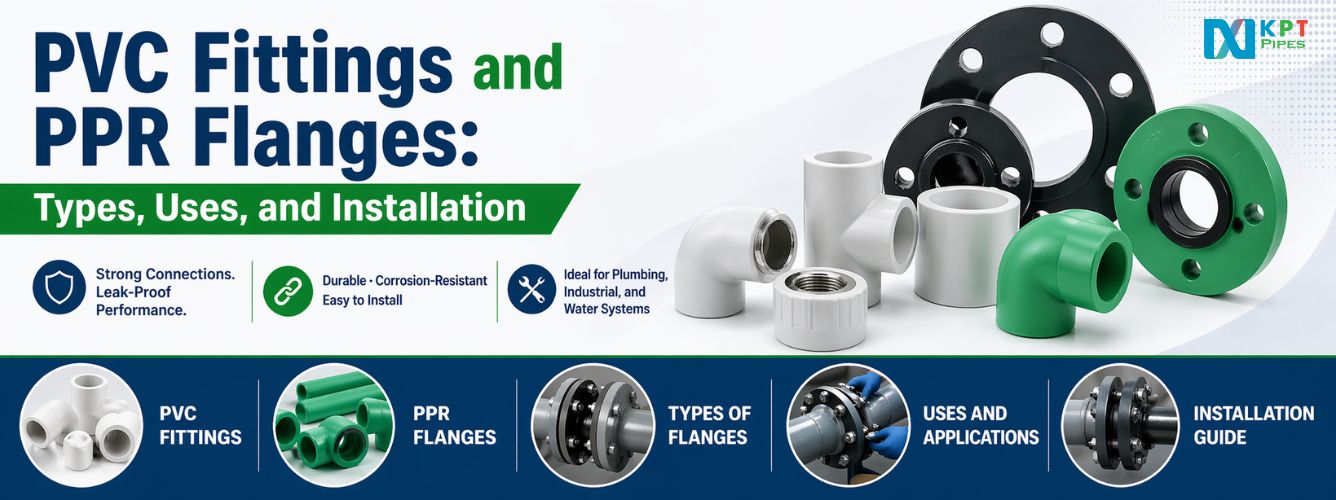
PVC fittings and PPR flanges play a crucial role in modern plumbing and piping systems. These components help connect pipes, valves, pumps, and other equipment securely and efficiently. Whether used in residential plumbing, commercial installations, or industrial piping systems, selecting the right fittings and flanges ensures durability, leak-proof performance, and long-lasting operation.
High-quality PVC fittings and PPR flanges are widely used because of their corrosion resistance, lightweight nature, and easy installation. Leading pipe manufacturers offer a wide range of flange fittings designed to suit different applications and pressure requirements. However, before installation, it is important to understand the types of flanges available and their proper usage.
Table of Contents
ToggleImportance of PVC Fittings and PPR Flanges
PVC fittings and PPR flanges are essential components in piping systems as they allow easy connection and disconnection of pipes. These fittings make maintenance and repairs easier without disturbing the entire pipeline. They are widely used in:
- Residential plumbing systems
- Industrial piping systems
- Water supply systems
- Irrigation systems
- Chemical processing industries
PVC fittings are known for their durability and cost-effectiveness, while PPR flanges are preferred for high-temperature and high-pressure applications. Together, they provide a reliable solution for various plumbing and piping requirements.
Types of Flanges and Their Applications
Different types of flanges are used depending on system requirements. Some commonly used flanges include slip flanges, van-stone flanges, threaded flanges, spigot flanges, and blind flanges. Each type has unique features and specific applications.
Slip Flanges
Slip flanges are among the most commonly used flange fittings. These flanges are designed to slide over the pipe, making installation simple and convenient. Slip flanges are widely used in PVC piping systems due to their ease of alignment and strong connection.
The installation of slip flanges requires solvent cement, which helps create a strong bond between the pipe and flange. Once installed, slip flanges provide a secure and leak-proof connection.
Slip flanges are categorised into two types:
- One-piece slip flanges
- Van-stone slip flanges
One-piece slip flanges are moulded as a single unit and offer strong durability. However, once glued, they are difficult to reposition. Therefore, proper alignment is essential before installation.
Van-Stone Flanges
Van-stone flanges are designed with a two-piece construction, making them flexible and easy to install. These flanges include a rotating ring that simplifies bolt alignment. This feature makes van-stone flanges ideal for applications where precise alignment is required.
Van-stone flanges are widely used in industrial piping systems, water treatment plants, and chemical processing units. Their flexible design allows easy installation and maintenance, making them a preferred choice for professionals.
Threaded Flanges
Threaded flanges are designed for easy installation without the use of solvent cement or adhesives. These flanges are connected to pipes using threaded fittings. Threaded flanges are suitable for low-pressure applications and systems where frequent disassembly is required.
These flanges are commonly used in:
- Low-pressure water systems
- Temporary piping setups
- Maintenance-friendly installations
Threaded flanges offer convenience and flexibility, making them ideal for specific applications.
Spigot Flanges
Spigot flanges are designed to fit over the fitting component instead of sliding over the pipe. These flanges require solvent cement for proper installation. Spigot flanges provide a strong and reliable connection, making them suitable for PVC and CPVC piping systems.
Spigot flanges are widely used in plumbing systems where strong connections and leak-proof performance are required. Proper installation ensures long-term reliability and efficiency.
Blind Flanges
Blind flanges are used to close or seal the end of a piping system. These flanges are ideal for stopping the flow in pipelines during maintenance or system expansion. Blind flanges do not require threading or solvent cement.
Blind flanges are typically bolted to another flange using bolts and gaskets. This creates a tight seal and prevents leakage. These flanges are commonly used in industrial and commercial piping systems.
Installation of PVC Fittings and PPR Flanges
Proper installation of PVC fittings and PPR flanges is important for system performance and durability. There are two primary types of flange connections:
- Flange-to-Flange Connection
- Flange-Valve-Flange Connection
Understanding these installation methods helps ensure a secure and leak-proof system.
Flange-to-Flange Connection
Flange-to-flange connections are commonly used in piping systems. This connection requires a gasket and bolt kit. The gasket ensures a leak-proof seal, while bolts secure the connection.
Bolt materials usually include:
- Stainless steel
- Zinc-coated steel
Stainless steel bolts offer better corrosion resistance and durability. Zinc bolts are more affordable but may not provide the same level of corrosion protection.
A full-face EPDM gasket is typically used to create a strong seal. Selecting the correct size of gasket and bolt kit is important for proper installation.
The bolt kit usually includes:
- Bolts
- Nuts
- Washers
- Installation tools
Proper tightening of bolts ensures even pressure and prevents leakage.
Flange-Valve-Flange Connection
Flange-valve-flange connections are used when installing valves between two flanges. This type of installation requires non-wafer style valves and stud packs.
The stud pack typically includes:
- Studs
- Nuts
- Washers
These components help create a secure and reliable connection. Proper alignment and tightening are important to ensure system efficiency.
Benefits of Using PVC Fittings and PPR Flanges
PVC fittings and PPR flanges offer several advantages, making them popular in plumbing and industrial applications.
- Corrosion-resistant materials
- Lightweight and easy to handle
- Easy installation and maintenance
- Long service life
- Cost-effective solution
These benefits make PVC fittings and PPR flanges ideal for modern piping systems.
Choosing the Right PVC Fittings and PPR Flanges
Selecting the right fittings and flanges depends on various factors, including:
- Application type
- Pressure requirements
- Temperature conditions
- Material compatibility
- Installation requirements
Choosing high-quality fittings ensures better performance and durability. Always consult professionals when selecting components for complex systems.
Conclusion
PVC fittings and PPR flanges are essential components in modern piping systems. They provide strong connections, easy maintenance, and reliable performance. Understanding different types of flanges and their applications helps in selecting the right components for your system.
Proper installation using the correct tools, gaskets, and bolts ensures long-lasting performance. Hiring professional plumbers or technicians is recommended for accurate installation and better results.
When purchasing PVC fittings and PPR flanges, choose trusted manufacturers that offer high-quality products. This ensures durability, efficiency, and long-term reliability for your plumbing and piping systems.