

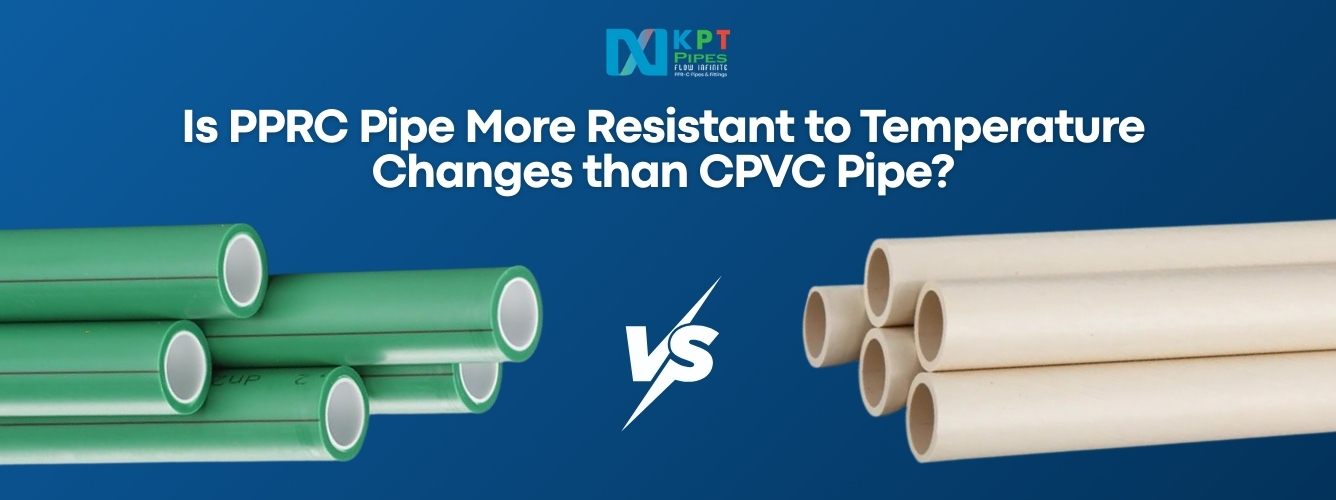
In modern plumbing and industrial piping systems, selecting the right pipe material is critical for long-term performance and safety. Among the most commonly used materials for hot and cold water distribution are PPRC Pipes and CPVC Pipes. Both materials are widely known for their durability, corrosion resistance, and efficiency in residential, commercial, and industrial plumbing systems.
However, when it comes to temperature resistance and thermal stability, many engineers, contractors, and project planners often ask: Is PPRC pipe more resistant to temperature changes than CPVC pipe? Understanding how these materials respond to temperature variations can help you make the best choice for your plumbing or piping project.
In this detailed guide, we will compare PPRC pipes and CPVC pipes in terms of temperature tolerance, thermal expansion, durability, and overall performance.
Table of Contents
ToggleUnderstanding PPRC Pipes
PPRC Pipes (Polypropylene Random Crystalline pipes) are an advanced form of polypropylene piping widely used for hot and cold water supply systems. These pipes are known for their excellent thermal resistance, long lifespan, and chemical stability.
PPRC pipes are designed using random copolymer polypropylene, which enhances the material’s ability to handle high temperatures and pressure without losing structural integrity. Because of this, they are commonly used in:
- Residential plumbing systems
- Commercial buildings
- Industrial pipelines
- Heating systems
- Drinking water supply networks
One of the major advantages of PPRC pipes is their ability to withstand temperature fluctuations without cracking or deforming, making them highly reliable for modern piping systems.
Understanding CPVC Pipes
CPVC Pipes (Chlorinated Polyvinyl Chloride) are a modified form of PVC that contains additional chlorine in the polymer structure. This modification improves the pipe’s heat resistance and durability compared to standard PVC.
CPVC pipes are widely used in:
- Hot water plumbing systems
- Residential pipelines
- Industrial fluid transportation
- Chemical handling systems
CPVC pipes can tolerate higher temperatures than regular PVC, which makes them a common choice for hot water systems. However, their performance under extreme or fluctuating temperatures differs from that of PPRC pipes.
Temperature Resistance: PPRC vs CPVC
When comparing temperature resistance, PPRC pipes generally offer superior performance in terms of long-term stability and flexibility.
Maximum Temperature Tolerance
- PPRC Pipes: Can typically handle temperatures up to 95°C for continuous operation.
- CPVC Pipes: Usually rated for temperatures up to 90°C.
While both pipes can manage hot water systems, PPRC pipes tend to perform better under sustained high temperatures.
Resistance to Thermal Stress
Frequent temperature changes can cause pipes to expand and contract. Over time, this thermal stress can weaken the pipe structure.
PPRC pipes have a more flexible molecular structure, allowing them to absorb thermal stress more effectively. CPVC pipes, on the other hand, are more rigid, which can make them slightly more vulnerable to cracking under repeated temperature fluctuations.
Thermal Expansion Comparison
Thermal expansion refers to the tendency of materials to expand when heated and contract when cooled.
Both PPRC and CPVC pipes experience thermal expansion, but the way they handle expansion differs significantly.
PPRC Pipes
- Flexible material structure
- Better ability to absorb expansion stress
- Reduced chances of cracks or pipe failure
- Longer lifespan in temperature-variable environments
CPVC Pipes
- Higher rigidity
- Requires proper installation with expansion loops
- More sensitive to sudden temperature shifts
Because of their flexibility and fusion welding installation, PPRC pipes often maintain their integrity better in systems where temperature changes are frequent.
Durability Under Temperature Variations
Durability is another key factor when evaluating pipe performance in varying temperature conditions.
PP-RC Pipe Durability
PPRC pipes are designed to last more than 50 years under normal operating conditions. Their structure allows them to resist:
- High temperatures
- Pressure variations
- Chemical corrosion
- Scaling and deposits
They also maintain structural stability even when exposed to continuous heating and cooling cycles.
CPVC Pipe Durability
CPVC pipes also offer good durability but may become brittle over time, especially when exposed to ultraviolet radiation or repeated temperature stress. While they perform well in many applications, their lifespan may be slightly lower than that of PPRC pipes in systems with constant temperature changes.
Installation Differences That Affect Temperature Resistance
Installation techniques also play an important role in how pipes handle temperature changes.
PPRC Pipe Installation
PPRC pipes are installed using heat fusion welding, which creates a homogeneous joint. This means the pipe and fitting essentially become one continuous structure.
Benefits include:
- No leakage points
- Stronger joints
- Better resistance to pressure and heat
- Improved durability under temperature changes
CPVC Pipe Installation
CPVC pipes are usually installed using solvent cement joints. While this method is effective, the joints may become weaker over time if exposed to frequent thermal expansion and contraction.
Chemical Stability and Temperature Performance
Another factor related to temperature resistance is chemical stability.
PPRC pipes maintain excellent performance even when transporting chemically treated hot water or industrial fluids. Their molecular structure provides resistance to chemical reactions even at elevated temperatures.
CPVC pipes also offer good chemical resistance, but certain chemicals or prolonged exposure to high temperatures can gradually affect their performance.
Applications Where PPRC Pipes Perform Better
Due to their superior resistance to temperature changes, PPRC pipes are often preferred in demanding environments such as:
- High-rise building plumbing systems
- Industrial hot water pipelines
- Heating systems
- Hospitals and laboratories
- Commercial complexes
In these applications, temperature variations are common, and PPRC pipes provide greater reliability and safety.
Why Many Engineers Prefer PPRC Pipes
Modern plumbing systems require materials that offer long-term reliability, minimal maintenance, and excellent temperature stability. This is why many engineers and plumbing professionals prefer PPRC pipes over CPVC pipes.
Some key advantages include:
- Higher temperature resistance
- Better flexibility under thermal stress
- Strong fusion-welded joints
- Longer service life
- Improved chemical resistance
These qualities make PPRC pipes a future-ready solution for modern piping infrastructure.
Conclusion
Both PPRC Pipes and CPVC Pipes are reliable materials used in plumbing systems around the world. However, when it comes to resistance to temperature changes, PPRC pipes generally outperform CPVC pipes in several key areas.
PPRC pipes offer higher temperature tolerance, better flexibility, stronger joints, and longer durability under fluctuating thermal conditions. These characteristics make them ideal for modern plumbing systems that require consistent performance under both hot and cold conditions.
While CPVC pipes remain a practical option for many residential applications, PPRC pipes provide superior long-term stability and reliability, particularly in systems exposed to continuous temperature variations.
For projects that demand high performance, durability, and temperature resistance, PP-RC pipes are often considered the more advanced and dependable solution.