
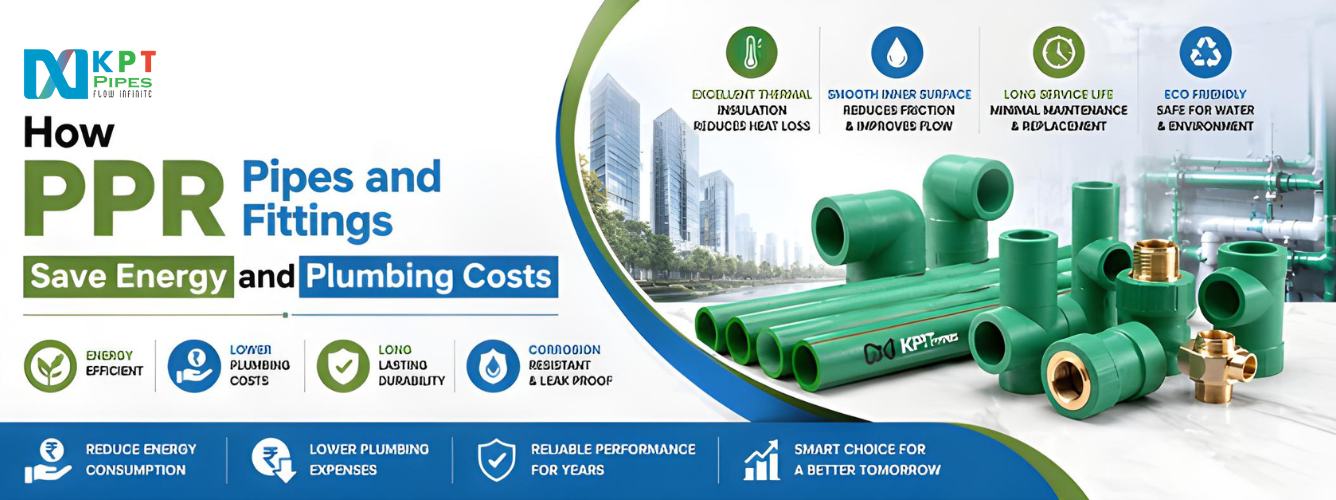
Modern plumbing systems are no longer just about water supply. Today, homeowners, builders, and industries look for piping solutions that offer durability, efficiency, and long-term savings. This is where PPR pipes and fittings have become a preferred choice across residential, commercial, and industrial projects. Known for their strength and thermal efficiency, PPR pipe are designed to reduce energy loss, minimise maintenance costs, and improve overall plumbing performance.
As energy prices continue to rise, choosing the right piping system can significantly impact operational expenses. PPR pipes not only provide reliable water flow but also help conserve energy and reduce unnecessary wastage. Their advanced material properties make them one of the most cost-effective plumbing solutions available in the market today.
Table of Contents
ToggleExcellent Heat Insulation Reduces Energy Loss
One of the biggest advantages of PPR pipes is their excellent thermal insulation property. Unlike traditional metal pipes, PPR pipes do not conduct heat rapidly. This helps maintain the temperature of hot water for a longer duration while reducing heat loss during transportation.
In hot water systems, less heat loss means water heaters consume less electricity or fuel to maintain the desired temperature. Over time, this significantly lowers energy bills in homes, hotels, hospitals, and commercial buildings. The insulation efficiency of PPR pipes also reduces condensation in cold water systems, preventing moisture buildup and improving overall efficiency.
Smooth Inner Surface Improves Water Flow
PPR pipes are manufactured with a smooth internal surface that minimises friction during water flow. Traditional pipes often develop scaling, rust, or deposits inside the pipeline, which restricts water movement and increases pumping energy consumption.
With PPR pipes, the smooth surface ensures uninterrupted water flow even after years of usage. Better water flow means pumps require less power to circulate water through the system. This reduction in pumping energy directly contributes to lower electricity costs and improved system efficiency.
Additionally, the absence of rust and scaling helps maintain water quality, making PPR pipes suitable for both residential and industrial applications.
Leak-Free Joints Prevent Water and Energy Waste
Leakage is one of the most common reasons behind water wastage and increased utility bills in plumbing systems. PPR pipes use heat fusion welding technology, which creates strong and leak-proof joints. Unlike threaded or glued connections, fusion-welded joints become a permanent part of the piping system.
Leak-free plumbing systems offer multiple advantages:
- Prevent water wastage
- Reduce repair and maintenance costs
- Maintain proper pressure in pipelines
- Improve energy efficiency in water heating systems
- Increase the lifespan of plumbing infrastructure
When there is no water leakage, pumps and water heaters operate more efficiently, reducing unnecessary energy consumption.
Long Lifespan Lowers Replacement Costs
PPR pipes are highly durable and resistant to corrosion, chemicals, and extreme temperatures. While traditional metal pipes may corrode or weaken over time, PPR pipes and fittings maintain their strength for decades. Their long operational life reduces the need for frequent replacements and repairs.
A longer lifespan means lower maintenance expenses and reduced labour costs. Builders and property owners benefit from fewer plumbing failures, making PPR pipes a smart long-term investment.
The durability of PPR pipes is especially beneficial in commercial buildings and industrial facilities where plumbing downtime can lead to operational losses and high repair expenses.
Resistance to Corrosion Enhances Efficiency
Metal piping systems are prone to corrosion, which can damage pipelines and affect water flow efficiency. Corrosion buildup narrows the pipe diameter, increasing pressure loss and forcing pumps to work harder.
PPR pipes are completely corrosion-resistant, allowing consistent water flow throughout their lifespan. Since there is no internal rust formation, the system continues operating efficiently without additional energy consumption.
This corrosion resistance also improves hygiene by preventing contamination caused by rust particles, making PPR pipes ideal for drinking water systems.
Lightweight Design Reduces Installation Expenses
Another important factor that helps save money is the lightweight nature of PPR pipes and fittings. Compared to metal pipes, PPR pipes and fittings are much easier to transport, handle, and install.
Their lightweight structure offers several benefits:
- Faster installation process
- Lower transportation costs
- Reduced labor requirements
- Minimal installation errors
- Easier maintenance and repairs
Quick and simple installation helps contractors complete projects efficiently while lowering overall plumbing expenses.
Suitable for Hot and Cold Water Applications
PPR pipes are versatile and suitable for both hot and cold water supply systems. Their ability to withstand high temperatures without deformation makes them highly energy-efficient in hot water circulation systems.
Since the pipes retain heat effectively, water remains warm for longer periods. This reduces the workload on heating equipment and contributes to lower electricity or fuel usage.
The same piping system can also efficiently manage cold water supply, making PPR pipes a reliable all-in-one plumbing solution for modern buildings.
Eco-Friendly and Sustainable Plumbing Choice
Sustainability has become a major concern in modern construction. PPR pipes are environmentally friendly because they are recyclable, non-toxic, and energy-efficient during production and operation.
Their long service life reduces material wastage, while their energy-saving properties contribute to lower carbon emissions. Choosing energy-efficient plumbing materials not only benefits the environment but also helps property owners reduce operational costs over time.
As green building practices continue to grow, PPR pipes are becoming an essential part of sustainable infrastructure development.
Minimal Maintenance Saves Long-Term Costs
Frequent plumbing repairs can become expensive and disruptive. PPR pipes require very little maintenance due to their strong structure and resistance to chemical reactions, scaling, and corrosion.
Their durable construction minimises the chances of leaks, cracks, and pipe failures. As a result, homeowners and businesses spend less on maintenance, repairs, and replacements.
Reduced maintenance also means fewer interruptions in water supply systems, improving convenience and operational efficiency.
Conclusion
PPR pipes and fittings have transformed modern plumbing systems by offering a perfect combination of durability, energy efficiency, and cost savings. Their excellent heat insulation, leak-proof joints, corrosion resistance, and smooth water flow help reduce energy consumption while lowering maintenance and operational expenses.
Whether for residential homes, commercial buildings, hospitals, or industrial projects, PPR piping systems provide long-term value and reliable performance. Investing in high-quality PPR pipes not only improves plumbing efficiency but also helps save money and support sustainable construction practices.