

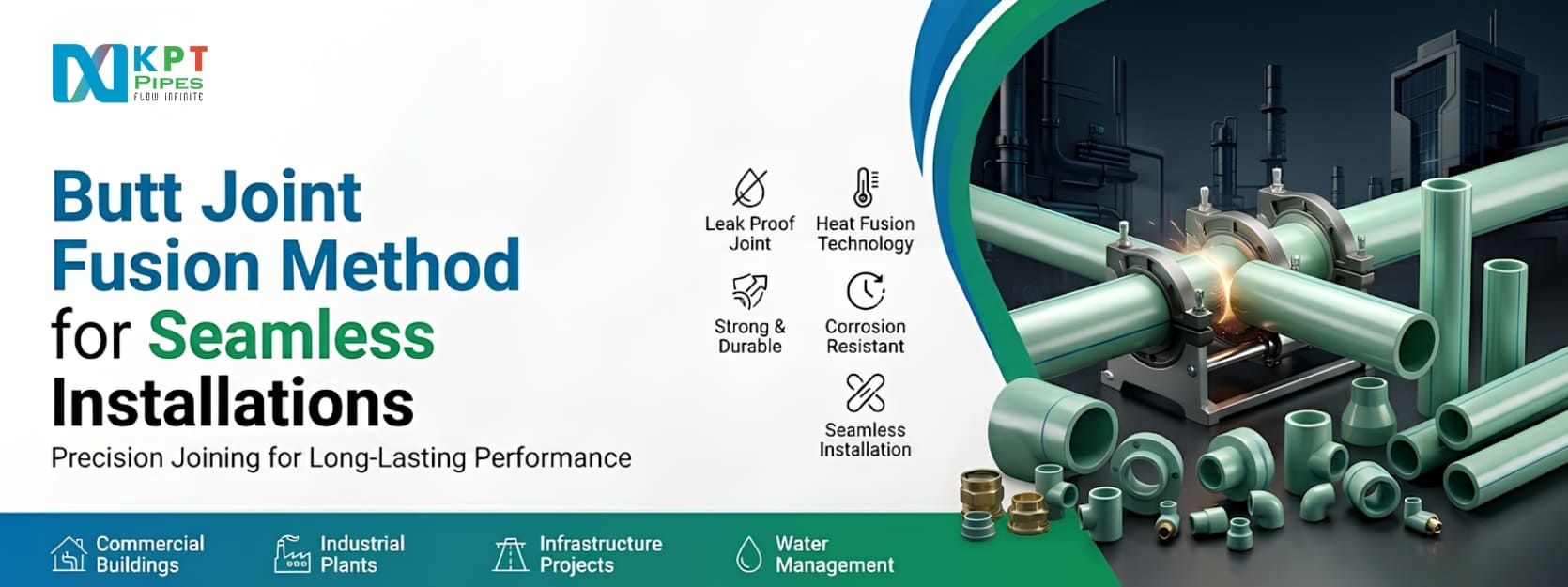
In modern plumbing and industrial piping systems, durability, efficiency, and leak-proof performance are essential for long-lasting operations. One of the most trusted techniques used for joining pipelines today is the Butt Joint Fusion Method. This advanced joining process creates strong, seamless, and durable connections that are suitable for a wide range of piping systems, including metal pipes, thermoplastic pipes, HDPE pipes, PPR Pipes, and Composite Pipes and Fittings.
As residential, commercial, and industrial projects continue to demand reliable piping networks, butt fusion technology has become a preferred solution for professional installations. The method is valued for its ability to create permanent joints that improve system performance while reducing maintenance and leakage risks.
Table of Contents
ToggleUnderstanding the Butt Joint Fusion Method
The Butt Joint Fusion Method is a heat-based welding process used to permanently join two pipe ends together. During the process, the pipe ends are heated to a specific temperature and then pressed together under controlled pressure. Once cooled, the fused joint becomes extremely strong and forms a continuous pipeline connection.
Unlike traditional joining methods that rely on threads, adhesives, or mechanical fittings, butt fusion creates a direct bond between the pipe surfaces. This eliminates weak points and significantly reduces the possibility of leakage.
The method is widely used across various piping systems because it provides:
- Strong and permanent joints
- Smooth internal flow
- High pressure resistance
- Reduced maintenance requirements
- Long operational life
It is especially effective for thermoplastic piping systems such as PPR Pipes and Composite Pipes and Fittings because these materials can be heated and fused uniformly.
Why Butt Fusion is Preferred in Modern Piping Systems
Traditional pipe joining methods may weaken over time due to corrosion, loose fittings, or adhesive failure. Butt fusion eliminates many of these issues by creating a seamless connection that performs like a single pipe section.
Modern infrastructure projects prefer this method because it offers:
Leak-Proof Connections
Fusion-welded joints prevent water or fluid leakage, making the system safer and more reliable.
Improved Strength
The fused area becomes as strong as the pipe itself, allowing the system to handle high pressure and heavy-duty applications.
Better Flow Efficiency
The seamless internal surface reduces friction and allows smooth flow of water, chemicals, or gases.
Long-Term Durability
Fusion joints resist corrosion, vibration, and environmental stress, increasing the lifespan of the pipeline.
Lower Maintenance Costs
Since the joints are permanent and secure, repair and maintenance requirements are significantly reduced.
Because of these benefits, the Butt Joint Fusion Method is commonly used in commercial buildings, industries, hospitals, hotels, water supply systems, and infrastructure projects.
How the Butt Joint Fusion Process Works
The Butt Joint Fusion process involves several important stages to ensure a durable and reliable connection.
1. Pipe Preparation
The first step involves cleaning and preparing the pipe ends. Dust, grease, moisture, and other contaminants are removed to ensure proper bonding. The pipe ends are then trimmed evenly using specialized tools to achieve perfect alignment.
Proper preparation is critical because uneven or damaged pipe surfaces can weaken the fusion joint.
2. Heating the Pipe Ends
A heating plate is placed between the aligned pipe ends. The plate heats the pipe surfaces to the required temperature, softening the material evenly.
The heating temperature and timing vary depending on the pipe material, thickness, and size. Accurate temperature control is important to avoid overheating or insufficient melting.
3. Joining the Pipes
After heating, the plate is removed carefully, and the softened pipe ends are pressed together under controlled pressure using a fusion machine.
The pressure forces the molten surfaces to merge and form a seamless connection. Proper alignment and timing during this stage are essential for achieving maximum joint strength.
4. Cooling and Solidification
Once joined, the pipes are allowed to cool naturally without movement or external force. During cooling, the fused material solidifies and forms a permanent bond.
After complete cooling, the joint becomes highly durable and capable of handling pressure, temperature variations, and long-term usage.
Applications of Butt Joint Fusion in Various Industries
The Butt Joint Fusion Method is widely used in different sectors because of its versatility and reliability.
Residential Plumbing Systems
Modern homes require durable and leak-proof piping systems for water supply and drainage. Fusion-welded joints help improve plumbing efficiency and reduce maintenance issues.
Commercial Buildings
Hotels, offices, malls, hospitals, and educational institutions use butt fusion pipelines because of their long service life and dependable performance.
Industrial Pipelines
Industries rely on fusion-joined piping systems for transporting chemicals, compressed air, gases, and industrial fluids safely.
Agriculture and Irrigation
Agricultural irrigation systems benefit from butt fusion technology because the joints can withstand continuous water flow and harsh environmental conditions.
Fire Fighting Systems
Fusion-welded pipelines are also used in fire protection systems where strong and pressure-resistant connections are essential for safety.
Pipes Compatible with Butt Fusion Technology
The Butt Joint Fusion Method can be used with different types of piping materials, depending on application requirements. These include:
- HDPE Pipes
- PPR Pipes
- Composite Pipes and Fittings
- Thermoplastic Pipes
- Polyethylene Pipelines
- Industrial Plastic Piping Systems
Among these, PPR Pipes and Composite Pipes and Fittings are especially popular because of their excellent heat resistance, corrosion resistance, and compatibility with thermal fusion methods.
Common Mistakes to Avoid During Butt Fusion Installation
Even though butt fusion is highly effective, improper installation can reduce joint quality and system performance.
Incorrect Heating Temperature
Overheating or underheating the pipe ends can weaken the bond and affect durability.
Poor Pipe Alignment
Misaligned pipes create uneven pressure distribution and reduce joint strength.
Contaminated Pipe Surfaces
Dust, moisture, or grease can interfere with proper fusion and lead to leakage.
Insufficient Cooling Time
Moving or stressing the joint before complete cooling can damage the connection.
Proper equipment handling and trained professionals are essential for achieving seamless installations.
Importance of Seamless Installations
Seamless piping systems improve safety, efficiency, and operational reliability. Leakage in pipelines can lead to water loss, pressure reduction, structural damage, and increased maintenance expenses.
The Butt Joint Fusion Method minimizes these risks by creating permanent and uniform joints. Whether used in residential plumbing, industrial systems, or commercial projects, seamless installations provide long-term performance and dependable operation.
Future of Butt Fusion Technology
As infrastructure technology continues to advance, butt fusion equipment is becoming more precise and efficient. Modern fusion machines now feature:
- Digital temperature controls
- Automated pressure systems
- Advanced alignment technology
- Faster installation capabilities
With increasing demand for durable and sustainable piping systems, fusion-welded pipelines are expected to play a major role in future construction and industrial developments.
Conclusion
The Butt Joint Fusion Method has transformed modern pipe installation by providing strong, leak-proof, and seamless connections. Its compatibility with multiple piping systems, including PPR Pipes and fittings and Composite Pipes and Fittings, makes it one of the most reliable joining techniques available today.
From residential plumbing to industrial infrastructure, this method delivers excellent durability, reduced maintenance, and improved operational efficiency. As the demand for advanced piping systems continues to grow, butt fusion technology will remain a key solution for safe and long-lasting installations.
FAQs
Q1. What is the Butt Joint Fusion Method?
Ans: It is a heat fusion process used to permanently join two pipe ends for strong and leak-proof connections.
Q2. Which pipes can be joined using butt fusion?
Ans: The method can be used for various piping systems, including HDPE, thermoplastic, PPR Pipes, and Composite Pipes and Fittings.
Q3. Are butt fusion joints leak-proof?
Ans: Yes, properly fused joints are highly durable and resistant to leakage.
Q4. Where is butt fusion commonly used?
Ans: It is commonly used in residential plumbing, industrial pipelines, irrigation systems, and fire protection networks.
Q5. Why is butt fusion preferred over traditional joining methods?
Ans: Butt fusion creates seamless and permanent joints that offer better durability, pressure resistance, and lower maintenance.